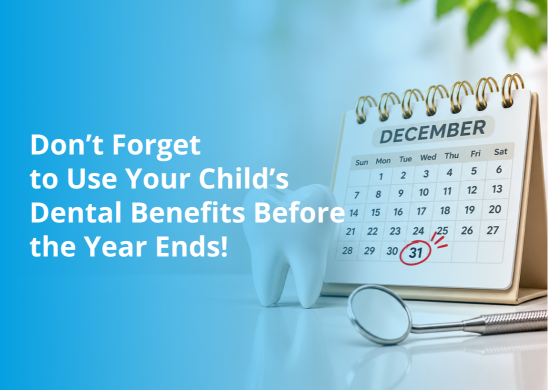
What If Your Child's Dental Insurance Ends at Year-End
Your child's dental appointment is coming up, but your family's insurance may change at the end of the year. Perhaps you're starting a new job, switching employer benefits, or losing your current dental coverage.
Should you schedule your child's visit before December 31? What happens if the new insurance doesn't begin until February?
If your child's dental insurance ends on December 31, the old policy generally won't cover services performed in January. Confirm the final coverage date, review replacement insurance options, and discuss any recommended treatment with your child's dentist.
At Up Pediatric Dentistry in Nashville, TN, we help families understand their children's dental needs and the practice's available payment options.
Here's how to keep your child's dental care on track while navigating a year-end insurance change.
Is Your Child's Dental Insurance Renewing or Ending?
First, determine whether your child's existing coverage is renewing or ending completely.
These situations affect dental benefits differently.
When insurance renews: Your policy generally remains active, but certain benefits may reset. Depending on the plan, this could include annual maximums, deductibles, or coverage allowances.
When insurance ends: Your child may lose access to the policy's benefits after the termination date. Replacement coverage may be necessary for future appointments.
For example, suppose your child's dental insurance ends on December 31.
An eligible examination performed on December 20 may qualify for coverage under the active policy. However, an appointment completed on January 10 generally won't qualify under that expired policy unless continuation coverage or another applicable arrangement is in place.
The date dental services are performed matters more than when you book the appointment.
Some plans also use benefit years that don't follow the calendar year.
Before scheduling, ask your insurer to confirm your child's final eligibility date, remaining benefits, and any restrictions on the recommended services.
What Should You Do Before Your Child's Dental Coverage Expires?
If your child's insurance is ending soon, reviewing their dental needs can help you decide which appointments should be scheduled before the coverage changes.
Start with their most recent examination and any treatment already recommended.
For example, your child may be due for a routine cleaning, or their dentist may have identified a cavity that needs attention.
These situations require different planning.
A preventive visit may have scheduling flexibility depending on the child's needs and the insurer's frequency rules. A painful or worsening dental problem may need prompt treatment regardless of coverage dates.
At Up Pediatric Dentistry, our preventive dentistry services help families monitor children's oral development and identify concerns early.
Before arranging an appointment, confirm:
- Whether your child is due for the recommended service
- Whether the service qualifies for benefits under the current policy
- Whether treatment needs to be completed promptly
- What your family may need to pay
Don't schedule unnecessary procedures simply to use remaining insurance benefits. Likewise, don't postpone clinically necessary care because a new coverage year is approaching.
Your child's dental needs should guide the appointment schedule.
How Can You Replace Your Child's Dental Insurance?
When coverage is ending, replacement options depend on the type of insurance you currently have and why you're losing it.
Check Your Employer's New Dental Benefits
If your family is changing jobs or employer-sponsored plans, ask when the current coverage ends and the new policy begins.
The replacement plan may have different provider networks, deductibles, waiting periods, or benefit restrictions.
Even when both policies come from the same insurance company, their coverage terms may differ.
Confirm that your child is enrolled in the new plan and that their preferred dental office participates in the applicable network.
If you're losing employer-sponsored coverage, ask whether continuation through COBRA is available.
COBRA may allow eligible families to keep certain employer-sponsored benefits, including dental coverage when applicable, for a limited period.
However, the family generally becomes responsible for the applicable premiums and other costs.
You can review the U.S. Department of Labor's COBRA guidance to understand eligibility and continuation rules.
Understand the 60-Day Marketplace Enrollment Window
If your family loses qualifying job-based health insurance, you may qualify for a Special Enrollment Period through the Health Insurance Marketplace.
HealthCare.gov generally allows eligible families to select Marketplace coverage within 60 days before or 60 days after losing qualifying health coverage.
For example, if your employer-sponsored health insurance ends on December 31, you may be able to select replacement Marketplace coverage before the termination date or during the applicable enrollment window afterward.
However, there is an important distinction:
Losing only a standalone dental insurance policy doesn't automatically qualify your family for the same Special Enrollment Period.
Marketplace dental coverage also follows separate enrollment rules.
You generally cannot purchase a standalone Marketplace dental plan unless you're purchasing a Marketplace health plan at the same time.
Some Marketplace health plans include dental benefits, while separate dental plans may be offered alongside eligible health coverage.
Before relying on this option, confirm your family's enrollment eligibility, the deadline, the available pediatric dental benefits, and when coverage would begin.
For details, review HealthCare.gov's Special Enrollment Period guidance and Marketplace dental coverage information.
Could Your Child Qualify for TennCare or CoverKids?
For some Nashville families, Tennessee's public coverage programs may provide an alternative to private dental insurance.
Eligibility depends on the household's circumstances and each program's requirements.
TennCare
TennCare provides medically necessary covered dental services for eligible children younger than 21.
These may include preventive examinations, cleanings, fillings, crowns, and other qualifying care.
TennCare doesn't automatically renew every child's coverage on December 31.
Each member has an assigned eligibility renewal month. Families can check their status and renewal requirements through TennCare's official renewal resources.
CoverKids
CoverKids provides dental coverage for eligible children younger than 19.
Its benefits include preventive and other medically necessary dental services, subject to program requirements.
Unlike some traditional private PPO plans, these programs don't use the same annual dental benefit dollar-limit structure.
Confirm the Current Dental Network
As of November 1, 2025, Renaissance administers dental benefits for TennCare and CoverKids, replacing DentaQuest.
If your child qualifies for either program, confirm that the dental practice participates in the current Renaissance network before scheduling.
Up Pediatric Dentistry's published patient information still references DentaQuest, so participation in the current network should be verified directly.
You can find coverage and provider information through the official Tennessee Dental Services page.
Which Option Fits Your Child's Dental Coverage Gap?
Not every family faces the same insurance situation.
A child whose coverage resumes after two weeks may need a different financial plan from one who will remain uninsured for several months.
Use this comparison to identify what to check first.
For example, if your child needs only a routine visit during a short uninsured period, paying directly for that appointment may be worth comparing with an annual membership commitment.
If your child needs ongoing care and is likely to remain uninsured longer, the financial comparison may be different.
The right decision depends on your child's needs, actual costs, and eligibility for available coverage.
What Does Up Pediatric Dentistry Offer Families Without Insurance?
Up Pediatric Dentistry offers several payment arrangements that families can consider when traditional dental insurance isn't available.
However, each option has different terms and purposes.
In-House Pediatric Dental Membership
Our in-house membership program provides specified preventive services and treatment discounts without functioning as traditional dental insurance.
The practice offers Baby & Toddler, Child, and Teen memberships.
Plans are advertised starting at $20 per month as a monthly price equivalent, but billed annually according to the detailed membership page.
Membership benefits include two routine examinations, two cleanings, diagnostic digital X-rays, fluoride treatments, and discounts on additional services under the applicable terms.
Families should confirm the complete annual payment, age eligibility, covered services, and exclusions before joining.
An annual membership may be worth considering for ongoing care, but it shouldn't automatically be treated as the best option for a temporary insurance gap.
Review the full Up Pediatric Dentistry Membership Plan before enrolling.
$99 New-Patient Special
For families establishing care, Up Pediatric Dentistry advertises a $99 new-patient special that includes an examination, professional cleaning, and necessary dental X-rays.
The published offer applies to eligible new patients only.
It cannot be combined with insurance and does not apply in cases of periodontal disease. Additional treatment isn't automatically included.
Because this is an introductory offer, it isn't an ongoing replacement for dental insurance or an option that automatically applies to existing patients.
Parents can review the New-Patient Special details before booking.
Financing for Eligible Treatment
Up Pediatric Dentistry also lists Sunbit as a third-party financing option.
Financing may help qualifying families spread eligible treatment costs over time.
However, financing is not insurance, and approval is not guaranteed.
Before accepting an arrangement, review the interest rate, payment schedule, potential fees, and total repayment amount.
Your Child's Year-End Dental Coverage Transition Plan
If you know your family's dental insurance is changing, follow these four steps.
Step 1: Confirm Both Coverage Dates
Find out exactly when your current insurance ends and when the replacement plan becomes active.
Don't assume the new policy starts automatically on January 1.
Step 2: Check Enrollment Requirements Early
If you're losing qualifying job-based health insurance, review the applicable Marketplace Special Enrollment Period before the deadline.
For dental-only insurance changes, ask your employer, insurer, or benefits administrator about available replacement arrangements.
If your family may qualify for TennCare or CoverKids, review their eligibility requirements and application process.
Step 3: Review Recommended Dental Care
Ask your child's dentist whether they are due for preventive care or have a condition requiring prompt treatment.
Clinical urgency should determine whether waiting is appropriate.
Step 4: Compare the Actual Costs
If there will be a coverage gap, ask about expected self-pay charges and applicable payment options.
Compare the total cost of any membership or financing arrangement rather than focusing only on the advertised monthly amount.
Taking these steps before the current policy expires can make the transition easier to manage.
Frequently Asked Questions About Dental Insurance Changes
Can my child's dental claim be processed after the insurance policy ends?
Often, yes. If your child received an eligible service while the policy was active, the insurer may process the claim after coverage ends. The claim must still satisfy the policy's eligibility, filing deadline, and benefit requirements.
Can my child still visit a pediatric dentist without insurance?
Yes. Families can arrange dental care without insurance, although they may need to pay directly or use an applicable practice payment arrangement. Confirm the expected charges before scheduling.
What if my child develops a toothache during an insurance gap?
Contact a dentist for an assessment. Worsening pain, swelling, fever with dental symptoms, or injuries may require prompt care. Difficulty breathing or swallowing requires emergency medical attention. Don't wait for replacement coverage when your child needs urgent evaluation.
Keep Your Child's Dental Care on Track at Up Pediatric Dentistry
At Up Pediatric Dentistry in Nashville's Berry Hill neighborhood, Dr. Breanna Barnes and Dr. Sara Ahmed, both board-certified pediatric dentists, provide personalized dental care focused on children's comfort, development, and long-term oral health.
We understand that changing insurance can make dental planning more complicated for families.
Our team encourages parents to understand their child's treatment recommendations, verify their current coverage, and review available payment arrangements before scheduling.
Whether your insurance is renewing, ending, or changing to a different plan, the goal is to maintain appropriate dental care without unnecessary financial surprises.
If your child's dental insurance is changing, contact Up Pediatric Dentistry to discuss their dental needs, insurance information, and available appointment options.
A change in coverage doesn't have to interrupt your child's journey toward a healthy smile.
Related Blogs
What If Your Child's Dental Insurance Ends at Year-End

Child Toothache at Night: What Parents Should Do Right Away?

Pacifier Teeth: What Changes Are Normal and What Needs Help?